City of Buenos Aires Area Guides - Information about all Areas of the City of Buenos Aires

City of Buenos Aires Area Guides - Information about all Areas of the City of Buenos Aires

In this section you will find a guide for each of the neighborhoods of the City of Buenos Aires. A short but valuable description to help you get to know a little more about the area you are intending to stay in. In addition to a general overview of the area you can also find another guide in which we include some spots that we believe might be to your liking. These guides are constantly under construction, so visiting them from time to time will be usefull for finding new information. If you wish to contribute to any part of the guides please contact us at En Buenos Aires Support, and your request will be answered within a 24h time frame.
image
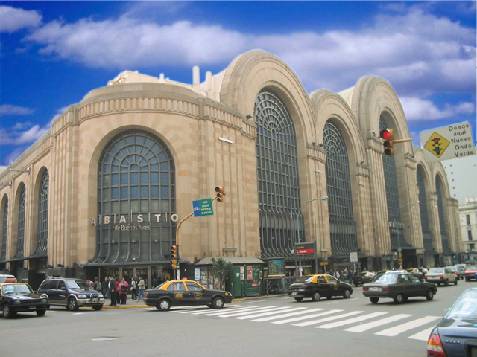
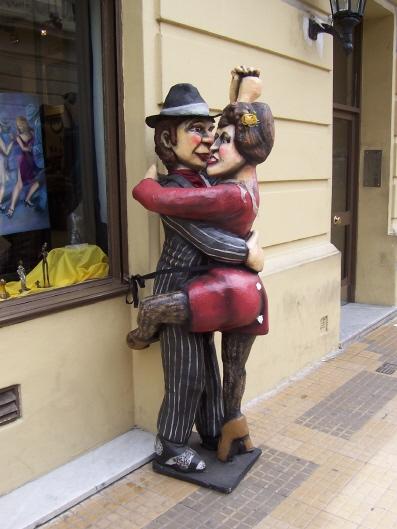
The legendary Abasto area, cradle of tango and a witness of the history of Buenos Aires, is one of the most popular sites chosen by turist to breath and feel tango in the place of its birth, visiting the street named after the legendar singer, Carlos Gardel, and the corner on which "El Morocho del Abasto" sang his first "milongas." Abasto is directly associated with the old market (today shopping), tango and Carlos Gardel, and the neighbourhood's revival that is visible now more than ever. The Abasto area holds a great part of Buenos Aires' history....
image
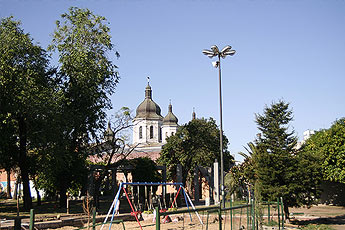
Agronomia was one of the first suburbs of the "Ciudad de la Santísima Trinidad," which was the name that Juan de Garay gave Buenos Aires when he refounded the city in 1580. The name was never adopted by the people. Today Agronomia, is one of the least populated areas in Buenos Aires, it is full of the traditionally low houses, has streets lined with trees, and can be a true labyrinth for anyone used to the usual right angled streets of Buenos Aires. Most of the areas houses are not higher than two stories and some of them are of English style....
image
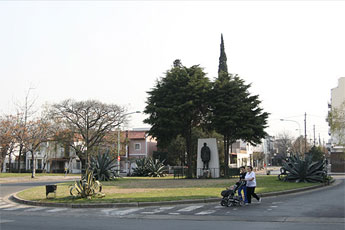
Almagro is a neighborhood that has always had a special aspect, being one of the few areas where tango, poetry, "quintas", political figures, slaughter houses, factories, good schools, clubs, and more, have all managed to coexist peacefully. There are discussions about the origin of the name of the neighborhood. Some say the area was named after Don Juan Maria Almagro y de la Torre, who was the original land owner. Other says "Almagro" comes from the name of Julian Almagro, the son of Don Juan M. Almagro, and who inherited his lands....
image
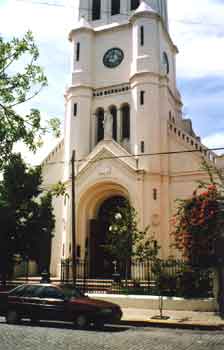
Balvanera, also known as Once, is an area that is constantly changing, and its mixed aspect can be percieved as the result of a blend of completely different parts. It is a very active place, densly populated, and full of traffic. Balvanera also a lot of apartment buildings and other kinds of houses. Most of them are old and have a long history. The area is highly Jewish, being the place where the Hebrew community has promoted commercial activities since the beginning of the 20th century and now there is also a growth of a Korean community....
image
Barracas comes from the word "barraca", which is a precarious construction made out of simple materials used for housing labourers and storage. During the 19th century Barracas was the area where the wealthiest families of Argentina resided, but in the end of the century when the yellow fever came to Buenos Aires the people fled to other areas. Despite this it is a prosperous area of the City of Buenos Aires with factories, markets and highways. In Barracas was one of the places where the battles of the British Invasions took place in the beginning of the 19th century....
image

Barrio Norte

Return to the top
Barrio Norte or "the Northern Neighbourhood" aquired its colloquial name because it was originally located in the northern part of center of Buenos Aires, and even though it has now been incorporated into this area the name has remained the same. Even though it is not a real "barrio," seeing as Barrio Norte in fact is part of Balvanera (Once), or Abasto, it is a constantly growning area, and finds itself among the top neighbourhoods of the City of Buenos Aires alongside Recoleta, Belgrano, Palermo, the Micro Centro, etc. ...
image
Belgrano is one of the most refined residential areas in the City of Buenos Aires. There are many old and important houses in the neighborhood, and most of them are typical constructions from the end of the 19th century. Belgrano is a place with a lot of culture, tradition, and history. It was originally designed by Carlos Thays, a French architect who also designed many of the most beautiful parks in Argentina. Regardless of its historical past, Belgrano has today been chosen as a place to build modern, sophisticated, comfortable, and occasionally even spectacular apartment buildings....
image
Boedo is in fact one of the cities newer neighborhoods. It was formed as recently as 1972 when Almagro was divided and Balvanera (Once) became an entity of its own. It was a place with low buildings, "chorizo" (sausage) style, repeated monotonously one after another. Today it has become a quiet residential area of the City of Buenos Aires. Its old low houses are now contrasting with the many newer structures that are appearing. Although it is a neighborhood without parks, its side-walks have beautifully aged trees, bringing the place to life. ...
image
Caballito is located in the exact geographical center of the City of Buenos Aires, as stated on a sign on Avellaneda street, 1023, which names it "The Geometrical Center of the City of Buenos Aires". The arrival of the street car contributed to the demographic and commercial growth of the area, like in many other "barrios" of Buenos Aires. Along with a large number of immigrants, who later came to build the subway, the area was transformed and divided into two parts; one elegant, expensive and quiet, and the other louder, and more commercial....
image
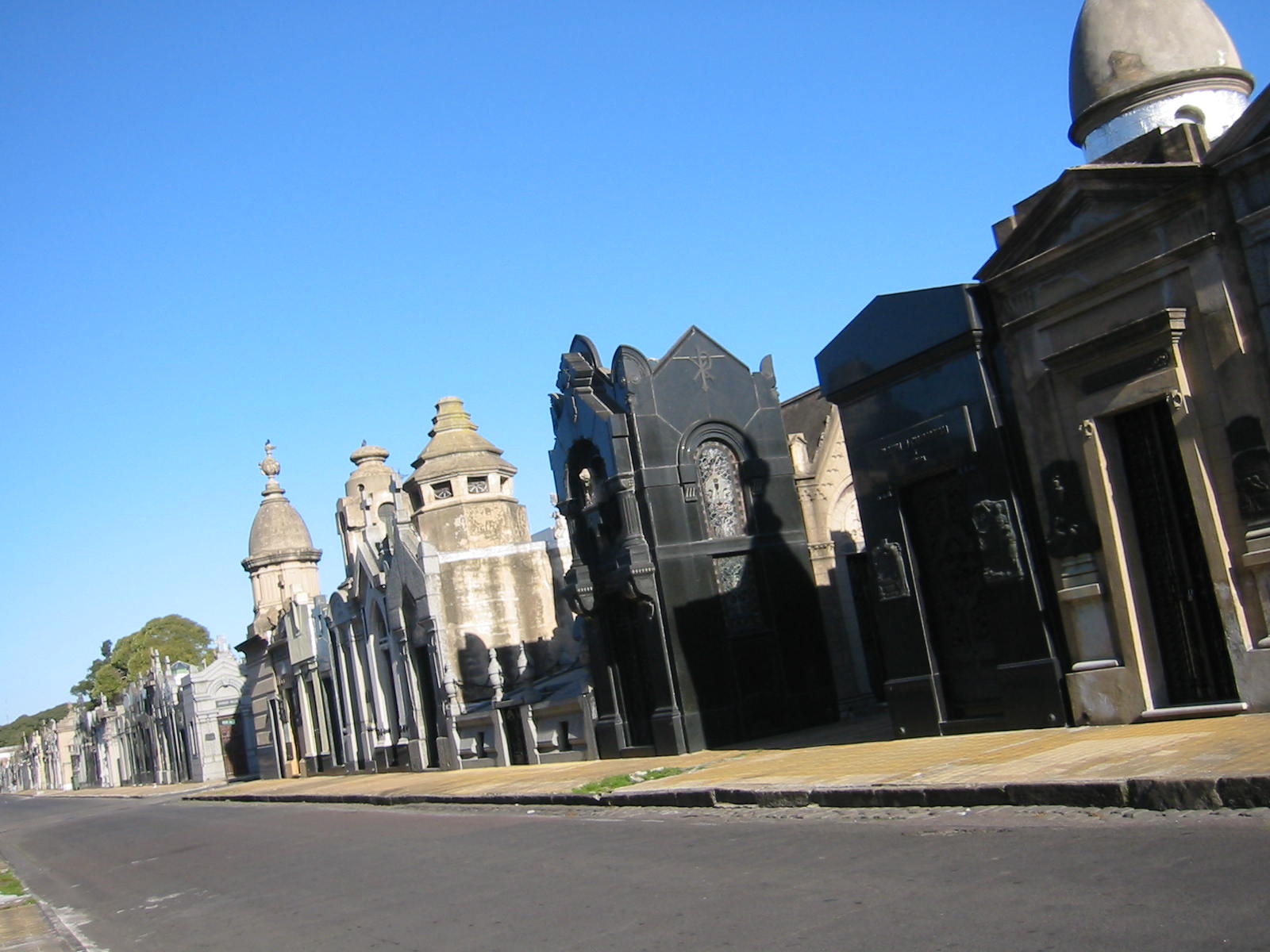
Chacarita is a quite area of the City of Buenos Aires, with streets full of trees, old houses, and also newer apartment buildings. Chacarita is famous for its characteristic cemetery, that faces the last railroad train station of the Ferrocarril San Martín. Today, the contrast between the very quiet and peaceful cemetery and the loud and busy train station is very great, and much like in Recoleta, death and gastronomy go hand in hand, and even though there is a class difference between Chacarita and Recoleta, many of the best restaurants in Buenos Aires can be found in this area....
image
Coghlan is a neighborhood named after its central train station with the same name that was named after John M. Coghlan. It's distinguished by its English architecture that to this day can be seen along the quiet streets of the area. Before the railroad company bought the lands, there were not many constructions, and a few spread out ranches could be seen across the landscape. But when the railroad was extended the lands around the station were populated by English families on these 30 hectares between Villa Urquiza and Belgrano....
image
Colegiales was an area originally populated by the Jesuits. The terrain was known colloquially as "La Chacarita de los Colegiales" because many school children came here every year to spend their holidays. In 1920 the Minetti y Cia. Ltda. Industrial and Commercial Society started the construction of the "Buenos Aires" windmill on Dorrego street, 1900 and in 1928 new cylinders were added to the development. Through the years, windmill has been put out of use. Today they have been remodeled into elegant and modern lofts....
image

Constitucion

Return to the top
Constitucion was fist called had many names before "Mercado Constitución" in tribute of the constitution of Argentina. It is a densely populated area of Buenos Aires, with thousands of people walking its streets daily. The Estacion Constitución is a very important center of communication, connecting the southern areas of the Province with the Capital. The area has a lot of aged houses and constructions mixed with a few newer apartment buildings. It is an uneven neighborhood, with a lot of movement during the day, and at night very quiet and empty....
image
Flores was incorporated into the City of Buenos Aires in the year of 1888. In the area you can find houses with fronts of various styles including, art deco, art nouveau, and some typical neo-colonial on the same block. These houses are mixed in with apartment buildings and other constructions in this sunny neighborhood full of life and movement. Flores has a Historical Studies organization that has reconstruced the history of the area and the persons that lived there. The house of Juan Manuel de Rosas, governor of Buenos Aires in the mid 19th century, can still be visited....
image
Floresta used to be known as "De La Floresta" and there are two theories explaining the origin of the name. The place is a mixture of cultures, and has through its history been the destination of various migrations by Jewish, Muslim, Italian, Korean, Ukrainian, Slovene, Bolivian, Peruvian and Paraguayan communities. . In Floresta the first line of "colectivos" (buses) was born. It ran along the street of Rivadavia and Lacarra until Primera Junta (First Gathering) in the neighborhood of Caballito. Floresta was also the place where the radiotelephony was originally used in Buenos Aires....
image
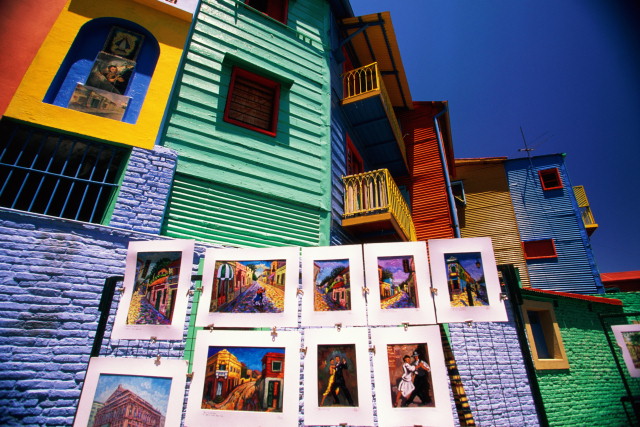
La Boca is named after its geographical location in the opening of the Riachuelo river into the Rio de la Plata. The many immigrants that arrived to Buenos Aires in the end of the 19:th century, mainly Italian, were the ones that gave the area its current appearance. The area is characterized by its low houses of channeled metal or wood painted in sharp colors and often constructed on pillars to protect them from the floods caused but the Riachuelo river. Other particularities of La Boca are uneven side-walks (raised to prevent flooding), and the areas old streets paved with stones....
image
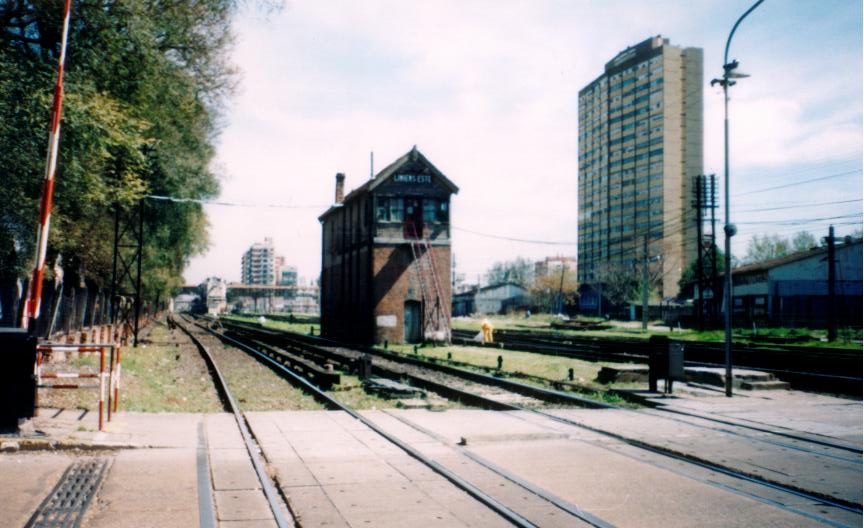
Liniers was named after the Virrey Santiago de Liniers Bremond. The development of Liniers and the advancement of the train went hand in hand. The first houses in zone were built in front of the train station, as was the Jesuits chapel and the first "pulperias". Following this burst of life, the neighborhood grew rather fast and two sub-areas were formed. The Ramón Falcón neighborhood that was formed of about 1.500 humble houses with short, narrow paved streets, all bearing the names of flowers, birds, or novels characters. The other sub-area was the Bajo Liniers....
image
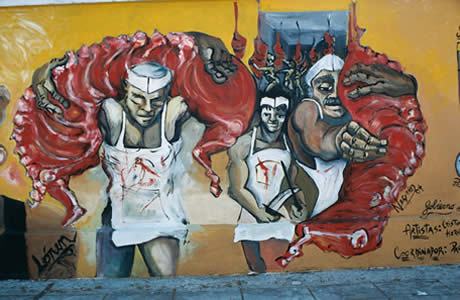
Mataderos was in the last century known as "Nueva Chicago," after the North American city. Being a large, very populated area, it is distinguished by it's mixture of city and rural areas of apartment buildings and low houses. It is the place to see a genuine "Payada" (improvised poetry). The old market house is each weekend filled with more than 300 stalls where people sell foods and gaucho handcraft. In the fair, you can also see horse taming, lazzo throwing, horse races as well as "guittareadas", song gatherings, and traditional dances....
image

Micro Centro

Return to the top
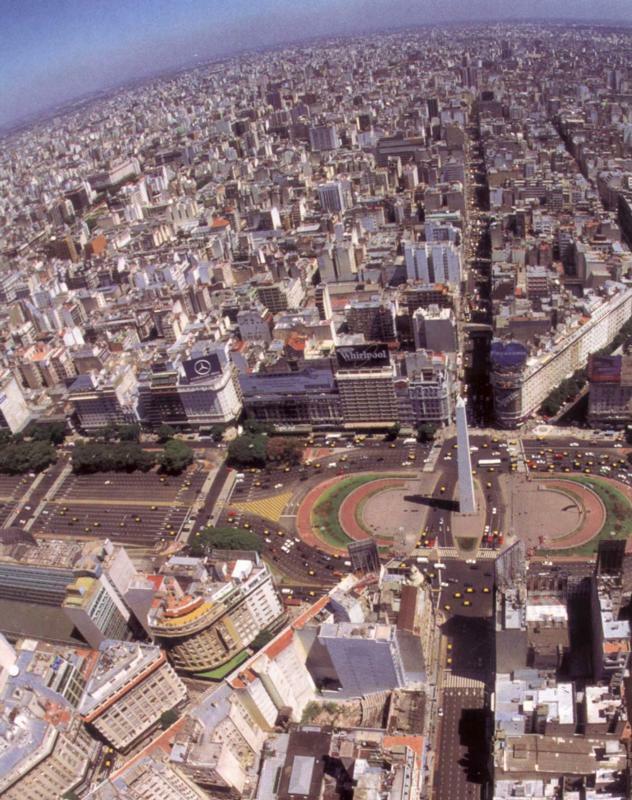
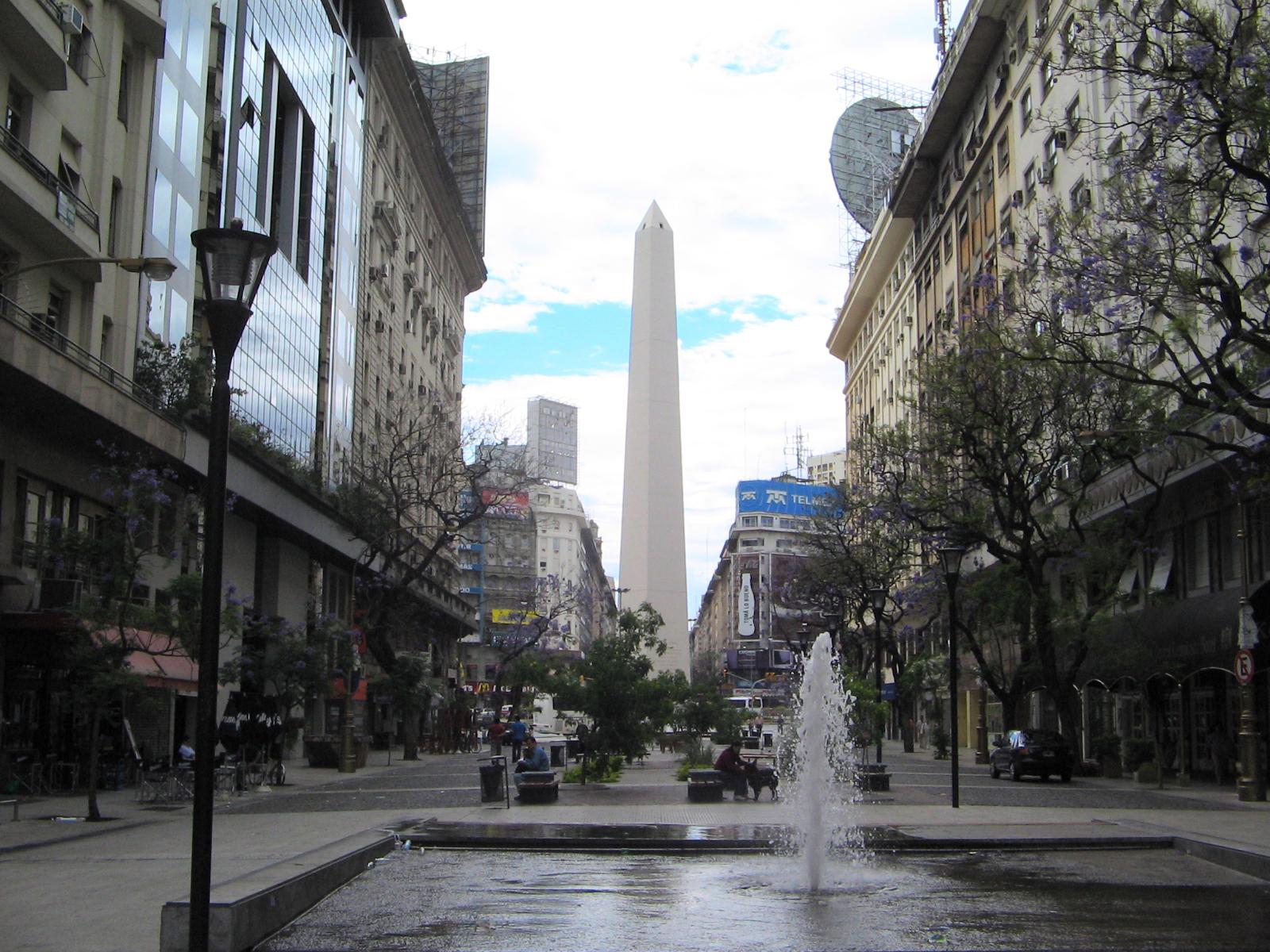
Micro Centro (its real name being San Nicolás) is the most visisted area in the entire City of Buenos Aires. To locals it is commonly refered to as "El Centro" (the center, or downtown). The name San Nicolás comes from the Church of San Nicolás built in 1773 on the corner of what is today Carlos Pellegrini and Corrientes, and it is the place where the Argentinean flag was first hoisted in Buenos. When the Corrientes Avenue was made wider, the church was removed, and all you can see today is a carving on the side of the "Obelisco" remembering this historical spot of Buenos Aires....
image
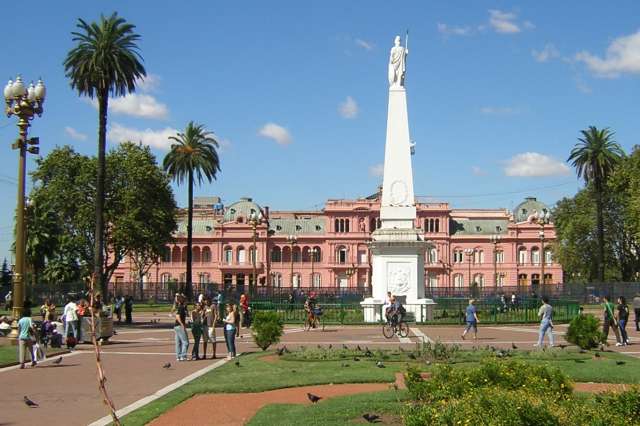
Monserrat was the first "barrio" in the City of Buenos Aires and has been a very large part of history of the City of Buenos Aires and the country, something that can be easily observed in the fact that most of the areas buildings and parks have been declared Historical Monuments. The "Plaza de Mayo" is called by many the "Plaza de las Protestas" (Protestants Square). This is where people that don't agree with the government congregate to make their claims in front of the "Casa Rosada" (Pink House). It has been the headquarters of the Argentinean government since 1810....
image

Monte Castro

Return to the top
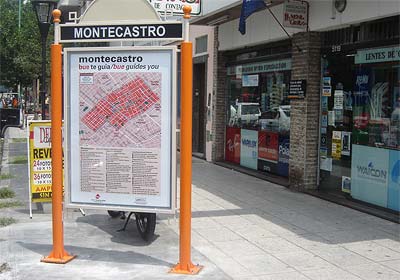
Monte Castro was named after Don Pedro Fernández de Castro. The neighborhood is one of the highest located ones in the City of Buenos Aires. Standing on the corner of Segurola and Camarones is like standing on top of the "Obelisco," because they are at the same height above see level. By the late 1930´s the General Company of Constructions started to build small and economic houses. Many of the lots were divided in half, creating small passages and narrow streets. Today, most of these formerly so humble houses have been remodeled....
image

Nueva Pompeya

Return to the top
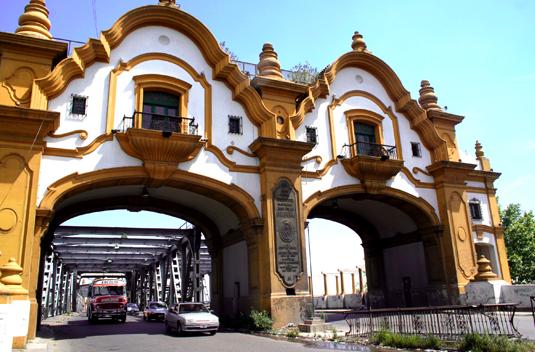
Nueva Pompeya was named after the church named "La Virgen del Rosario de Pompeya." The neighborhoods population was characterized as being cosmopolitan, and had the common characteristic of living a religious life style. In 1938 the Burgos Bridge was inaugurated, today known as the "Punete Uriburu" (Uriburu Bridge). It is one of those spots in Buenos Aires that still holds a special place in the hearts of the people that live there. It is an industrial area and mainly populated by the working class. The houses are low, and apartment buildings are almost non-existent....
image
Nuñez was founded by Florencio Emeterio Nuñez. It is located in highlands, with hills sloping down into the river. With the exception of the bigger avenues, it is a quiet area. It has always been an area identified by its big old houses, many of which today have had to give way for the newer PH (Town House) style. Nuñez has a lot of large buildings with apartments and a lot of commercial activity, especially on the Cabildo and Libertador Avenues. The area is currently going through a haitational overpopuation since it is very attractive to real estate investors....
image
Palermo, together with Palermo Viejo, is the largest areas in Buenos Aires. It is mainly a residential area with a few larger office buildings that have appeared in the last decades. Well known for its elegant middle, and mid-high class houses and its tree lined streets. Palermo is divided into different zones called; Palermo Chico (Barrio Parque), Palermo Hollywood, Palermo Soho, and Palermo Viejo. Most people that come to the area go to the neighborhoods famous forests, gardens, and lakes. It has the largest green area in all of Buenos Aires....
image

Palermo Viejo

Return to the top
Palermo Viejo is part of the neighborhood Palermo. It was originally named Villa Alvear, and was designed by the architect Antonio Buschiazzo. Palermo Viejo is full of cafes, design houses, "alternative" theatres, and a large number of restaurants that have given the area a boisterous burst of life, and there is a wide variety of bars. In Palermo Viejo you can also find the "Plaza Italia" located in its center, and the "Jardin Botanico" (Botanical Garden), the "Jardin Zoologico"(Zoological Garden), and the estate of exhibitions for the Rural Argentinean Society in its outskirts....
image

Parque Avellaneda

Return to the top
Parque Avellaneda is a calm area excluded from rushing rhythm of the City of Buenos Aires. There are constructions dating to the beginning of the century alongside apartment buildings and mono-blocks. Parque Avellaneda has many green areas and small parks where the tranquility of an ordinary provincial town can be felt. Some of its streets are wide and lined with trees. Besides its rich landscape and variety of trees, Parque Avellaneda has the city of Buenos Aires' Green House, inaugurated in 1916. It was installed to provide trees and flowers to all the municipality offices in the area....
image

Parque Chacabuco

Return to the top
Parque Chacabuco is an area where most of the activity is centered around the huge park that is the inspiration of the neighborhood's name. It has an area with residential housing, a few apartment buildings (none too tall), and little commerce that is not very intense. Parque Chacabuco started to shape around the National Gunpowder Factory. In the middle of the Park there used to be a store that sold fresh milk. The area was full of traveling sellers that would put up their stalls in the local fairs and offer all kinds of eatable goods. These fairs were made official in 1910 by Joaquín S. De Anchorena....
image

Parque Patricios

Return to the top
Parque Patricios is an area with streets lined with trees, many of which have not yet been paved and still have their original stone. The are has many factories, big transportation companies and many hospitals, and it might be concidered an industrial area of the City of Buenos Aires. The population is mainly of the working class. The factory buildings were originally used as the abodes of immigrants. Later these same families moved to the "Conventillos". These were a sort of apartment building, especially built for workers and immigrants, and were a rather cheap housing option....
image
La Paternal is a quite neighborhood in the central part of the city of Buenos Aires with a low population density. Like many of the older areas in the city, La Paternal is an area with low "casas chorizo." The main avenue of La Paternal is the San Martin Avenue, and most of the commercial activity of the area is centered around it. Unlike the rest of La Paternal, everything near this avenue is full of taxis and "Colectivos" (buses). This high concentration of means of transport make it very noisy and full of activity even late at night....
image

Puerto Madero

Return to the top
Puerto Madero was named after Eduardo Madero. The area has a huge touristic potential and there is a important real estate endeavor taking place. From its beginnings Puerto Madero was aimed at the future. There are innumerable projects that have the aim to deeply transform the place and above all, doing as little ecological damage as possible. Recently Puerto Madero has become one of the most luxurious and modern areas in Buenos Aires, and is visited daily by thousands of tourists from all over the world....
image
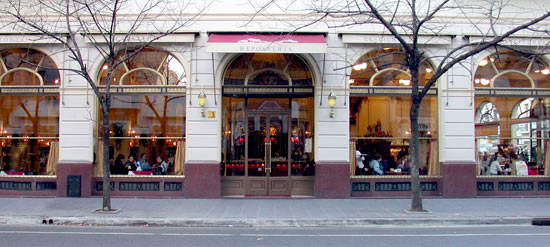
Recoleta is named after a convent called the "Convento de los Padres Recoletos" that had attached to it and the now so famous cemetery in the beginning of the 18:th century. The cemetery that occupies about six hectares of land is the resting place of many national figures. All around the cemetery of Recoleta there is an area of restaurants, movie theaters, and coffee houses. Recoleta is among the most visited areas by tourists and locals. For several years it has been chosen by the youth of Buenos Aires because of the large amount of bars and clubs in the area....
image
Retiro remains to this day an area full of constant transition, and is during rush hour a sea of people coming and going from the area that holds three major train stations and the city's biggest bus terminal. Retiro is a rather small neighborhood compared to others in the City of Buenos Aires, but still offers great diversity. Surrounding the "Plaza Carlos Pellegrini" you can find the most luxurious hotels and apartment buildings, and the distinguished palace area near the "Plaza San Martin" has a contrast almost invisible to the eyes of tourist with the "Villa 31."...
image
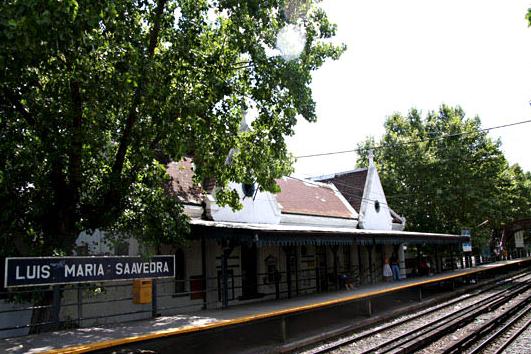
Saavedra, compared to the more centric areas of the City of Buenos Aires, is one of the largest areas with a lot of space and little population located in the north-west of the city. Saavedra is the only neighborhood in Buenos Aires that was formally founded with a creation act on the 27 of April of 1873. The area is situated on high lands and has nice slopes and slides between the General Paz Avenue and "Parque Saavedra" ( Saavedra Square). It is very quite, with streets lined by trees giving Saavedra a calm and very provincial feel to it, divided into three well-defined areas. ...
image

San Cristobal

Return to the top
San Cristobal is centered around the actual "Iglesia de San Cristóbal" (Saint Christopher Church) and has a very special history. Since its beginings, the area has been the scenary for a great amount of historical events in the City of Buenos Aires. It used to be place of great country houses that dominated the area. "Conventillos" and public cinemas, like the "Select San Juan" characterized San Cristobal as one of the cradles of the tango. The area was, like Constitución greatly changed when the freeway was constructed, and then by the widening of the old Jujuy street....
image

San Nicolás

Return to the top
San Nicolás, or as local know it; "El Micro Centro" (The Micro Center) is one of the most visited areas in The City of Buenos Aires and millions of people come to work here each morning. It is very odd that any person living in Buenos Aires would refer to this as the San Nicolas area, but it is very diverse and has a large variety of stores and shops, and it is a unique experience walking through the sea of people that transit through here during rush hour. During the night the area is completely emptied of people, and there are not a lot of restaurants and bars open....
image
San Telmo is one of the oldest areas in the City of Buenos Aires, and is also one of the ones that has conserved its old architecture in the best way inside this constantly changing city. San Telmo is characterized by its large old houses of colonial style, and the many streets of the area that are still maintain their original cobblestone paving. The area is full of antique stores, and on the weekend the neighborhood transforms into a large antique market, and the calle Defensa (Defence street) is cut off and filled with stalls selling everything one can dream of....
image

Velez Sarsfield

Return to the top
Velez Sarsfield is a typical area in the City of Buenos Aires with low houses that are so commonly seen in the city. The area still has a medium class profile, where single family homes coexist with small workshops and stores. There are areas of the so called "Casas Baratas" (Cheap Housing) in Velez Sarsfield. These houses were built in 1928, during the presidency of Marcelo T. de Alvear, by of Juan F. Cafferata who had always concerned himself with that people with fewer resources having access to decent housing....
image
Versalles is an exclusively residential area with a style of its own. Its low houses and streets lined with old trees give the population of this part of the City of Buenos Aires an exquisite sensation of peace and tranquility. It is the highest situated area in Buenos Aires, and also the one that has the most green area per person. According to measurements by the City Government, it is the quietest, and the calmest neighborhood in the entire City of Buenos Aires. Since it is considered a residential area, buildings of more than three stories are not allowed....
image

Villa Crespo

Return to the top
Villa Crespo was founded on February 14, 1935 and is located behind the Maldonado Stream, but the actual limits of the area were not set until 1972. It was named by the the lands auctioneers, with encouragement from the land's owners, the Lebrero family, who started calling the area "la Villa de Crespo." These lands were, in fact, the first Villa in the City of Buenos Aires was Villa Crespo. One part of Villa Crespo is called Villa Kreplaj, this name was given by those who came here escaping WWI from Russia, Ukraine and Poland....
image

Villa del Parque

Return to the top
Villa del Parque was founded in 1908 and is located on the lands that were originally part of the Chacarita de los Colegiales (Today Chacarita) populated by Jesuits. Today it is a residential, with houses and petit-hotel villas, according to their owner´s tastes. These houses, stand out for being different from the "Chorizo" (sausage) style of houses, of Italian origin, very common in other areas of Buenos Aires. There are many passages (small streets) that are characteristic of Villa del Parque. These were the result of dividing blocks in two....
image

Villa Devoto

Return to the top
Villa Devoto, founded by the italian Antonio Devoto, is considered the "Jardin de la Ciudad" (Garden of the City) since it has more trees and plants than any other neighborhood in the City of Buenos Aires. The area has wide quiet streets lined with trees, and its pleasant atmosphere is quite the opposite of the rest of the City of Buenos Aires that is so nervous and packed with people. Villa Devoto has houses that are low and comfortable with large gardens covered with flowers and low bushes in every color....
image

Villa General Mitre

Return to the top
Villa General Mitre was named in honor of the ex-president of the Argentina Nation, Bartolomé Mitre. The Areas main assets are it wide and calm street, some with asphalt and other that still have their original cobblestone. It is an area with a lot of trees, simple houses, and among them a few tall towers and businesses giving the area a lot of life. The lands of Villa General Mitre used to form part of what is today Santa Rita and Flores, and they are often confused. In fact, Villa General Mitre is not usually known by its real name, and only in the Municipality the area is referred to correctly....
image

Villa Lugano

Return to the top
Villa Lugano is situated in the Southeast corner of the City of Buenos Aires. Today Villa Lugano is a mixture of cultures and times, the big colonial houses constructed around the train station still stand as a reminder of the origin of the neighborhood, and around it you can find tall buildings built in such a way that they "stack" people with lesser resources on top of each other. There are the monoblocks, like the one facing the Castañares street, well constructed with large gardens and well taken care of with a neatness turning the area into a residential neighborhood....
image
Villa Luro is a relatively small area in the west part of the City of Buenos Aires. Villa Luro is a strong area that is becoming better and better with each day. It has apartment buildings and its houses are low with a sub-urban feeling around them, with the exception of the houses surrounding the main avenues. Around the 1970´s the first slaughterhouses were inaugurated in the proximities of Villa Luro, bringing along a great increase in the population, since a lot of industries having to do with cattle arrived to the area....
image

Villa Ortuzar

Return to the top
Villa Ortuzar is a rather small area of the City of the Buenos Aires that is divided into two sections. From Los Incas Avenue to La Pampa you can find mansions with large gardens and tall apartment buildings. The other half of the neighborhood is where the more common, low, and simple housing dominates the landscape. In this more humble part of the neighborhood, the custom of having a "Mate" on the side-walk with friends is very common. The 26th of April is the day of Villa Ortuzar, commemorating the date in which Santiago Francisco de Ortuzar bought the lands that are now Villa Ortuzar....
image

Villa Pueyrredon

Return to the top
Villa Pueyrredon is a quite large area in the northwest part of the City of Buenos Aires. It has many two way streets with the common low houses dominating the landscape. The medium class population is calm and has a great sense of community. The name of the neighborhood, Villa Purredon, comes from the train station "Km. 14" on the route called "General Mitre." The station was in 1907 re-named "Pueyrredon", in tribute to General Brigadier Juan Martín de Pueyrredon. Villa Puerredon was originally populated by European families that came to work in the area....
image
Villa Real is a small neighborhood in the City of Buenos Aires. The most common view that you will see in this area are streets lined with trees and low houses. In the same way as in many other neighborhood in the city, its old constructions contrast sharply with the new apartment buildings with their large gardens. Villa Real has a middle-class population that are proud to live in this little known area. The "Quinta de los Virreyes" (The house of the Spanish ruler of America) used to be located in this area, and hence has the name Villa Real (Royal Villa)....
image

Villa Riachuelo

Return to the top
Villa Riachuelo, situated in the south-east of the City of Buenos Aires, is the most southern neighborhood in the city. This area with the typical low houses and a few larger apartment buildings, is the birthplace of various famous artists that have given the area a very special atmosphere. Its colorful houses and cobblestone paved streets makes it impossible for Villa Riachelo's traditional feeling to go away. Thanks to the recycling of old, abandoned houses and apartment buildings, the area has lately started to develop into a place with more office spaces and tourist artractions....
image

Villa Santa Rita

Return to the top
Santa Rita is a small, low profile area in the Center of the City of Buenos Aires. Most of the houses are modest and rarely have more than one story, there are some apartment buildings interrupt the perfect view of the sky. It is an area without parks or green spaces, even though there was for a long time a lot of unoccupied terrain. To compensate for its lack of parks, the area has a rather large variety of trees along its streets. Their shade is very refreshing and make summer afternoons more enjoyable....
image

Villa Soldati

Return to the top
Villa Soldati was founded in the beginning of the 20:th century by Swiss José Soldati, a hardworking man of progress. He also founded the Villa Lugano area. The neighborhoods train station was constructed by the Railroad Company in cooperation with Mr. Soldati that carries his name. Villa Soldati was one of the last areas of Buenos Aires to receive electric power. The most used transportation, second to the train, were horse pulled wagons. It is a poor and outcast area compared to many others in the City of Buenos Aires....
image

Villa Urquiza

Return to the top
Villa Urquiza is an area that has a mixture of many different things. From its old one or two story houses, to large apartment buildings. It has calm and tree-filled streets contrasting with wide avenues with their respective heavy traffic. Villa Urquiza has several parks, some larger than others, making it a very enjoyable and easy going area to live in. But don’t be fooled, it also has some very hectic commercial areas. Villa Urquiza´s founder was Francisco Seeber who fought in the war against Paraguay. He was also mayor of the City of Buenos Aires from 1889 to 1890....